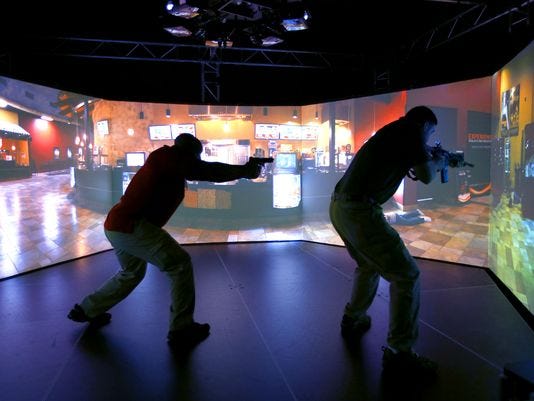
Virtual and augmented realities are similar technologies that are finding a place in modern education. Virtual worlds are 100% digital ecosystems, while augmented realities are digital objects superimposed in real-life scenes on a phone or tablet (Edutopia, 2013). These technologies can be used for adult learners in a number of ways, such as allowing students to take virtual field trips of museums, government buildings, historical sites, etc. Providing the most immersive learning experiences for adult learners can increase student motivation by giving students confidence in the content when information is accessed in a more interesting way, thereby holding their attention, and providing a variety of real-life applications. Students can also participate in training simulations for practical “experience.” The relevance established by these applications can improve student satisfaction, which is why I think the technology can be meaningful in higher education. As an adult educator, I imagine the technology would be a good complement to lessons that can be difficult to comprehend without a relevant lived experience.
Reference
Edutopia. (2013). Technology integration in education. Retrieved from http://www.edutopia.org/technology-integration
 Emerging Educational Technologies