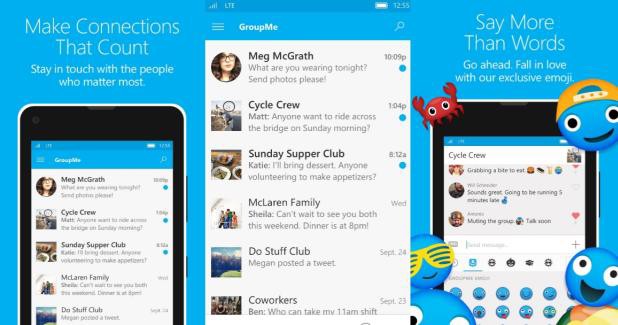
There is a growing movement in higher education of a participatory learning culture that embraces global sharing of information (Bonk, 2011). Current online education, however, is limited in the types of interactions it promotes among students and faculty. Discussion posts, for example, are topic-specific, formal, and graded. They are necessary to demonstrate student participation and understanding, but they are not conducive to “normal” student socialization. Peripheral discussions, such as current events, related topics, and applications in the field, do not have a place within the existing online format. With network learning as the current most common form of self-directed learning, and projected to become the most dominant form of learning in general, it makes sense to enhance the collaboration capabilities of the online learning experience (Lawson & Murray, 2018). Additionally, social media competence is an emerging workplace competency that literature suggests many graduates are lacking as they enter the workforce (Zhu, Yang, Xu, & MacLeod, 2018). GroupMe offers a free and user-friendly solution to these problems, providing an environment that is familiar and comfortable to most of the student population, while preparing those who are not yet fluent users (Stathopoulou, Siamagka, & Christodoulides, 2019).
GroupMe is a free group messaging application and each group is limited to the people invited, so interactions are typically specific to the purpose of the group. It is different from social media sites in that it is simply for text communication and not designed for content or generalized socializing. Class-specific groups, for example, would consist only of the enrolled students of a particular class and term. GroupMe could be used by students and educators to streamline communication regarding group projects, provide a place to ask questions about class assignments, requirements, and readings, and send reminders or other helpful information. In order to do any of these things now, students must log on to their student profile on the school website from a computer. This is remarkably inconvenient, particularly when students are in different time zones and access their computers from home at different times. These limited abilities clearly limit the interaction and engagement necessary for student motivation.
References
Bonk, C. J. (2011). The world is open: How web technology is revolutionizing education. San Francisco, CA: Jossey-Bass.
Lawson, S. & Murray, S. (2018). Assessing the Effects Social Media has on Online Learning. Journal of Marketing Development and Competitiveness, 12(2), 69-75. doi:10.33423/jmdc.v12i2.1259
Stathopoulou, A., Siamagka, N., & Christodoulides, G. (2019). A multi-stakeholder view of social media as a supporting tool in higher education: An educator–student perspective. European Management Journal, 37(4), 421-431. doi:10.1016/j.emj.2019.01.008
Zhu, S., Yang, H., Xu, S., & MacLeod, J. (2018). Understanding Social Media Competence in Higher Education: Development and Validation of an Instrument. Journal of Educational Computing Research, 57(8), 1935-1955. doi:10.1177/0735633118820631
 Emerging Educational Technologies