Social

Most of my posts focus on the many benefits of technology for education and professional development. This post will explore the pitfalls that pervasive technology presents, particularly in the social media realm. We have all heard the news stories or rumors of a professional who posted what their employer considered to be a not-so-professional picture on their social and how it costed said person their job. It is also common knowledge now that some employers screen potential employees’ social media pages for inappropriate content as part of their vetting process. This begs a series of questions- What is appropriate content for social media? How do I know what is fine and what is not? And, who gets to decide?

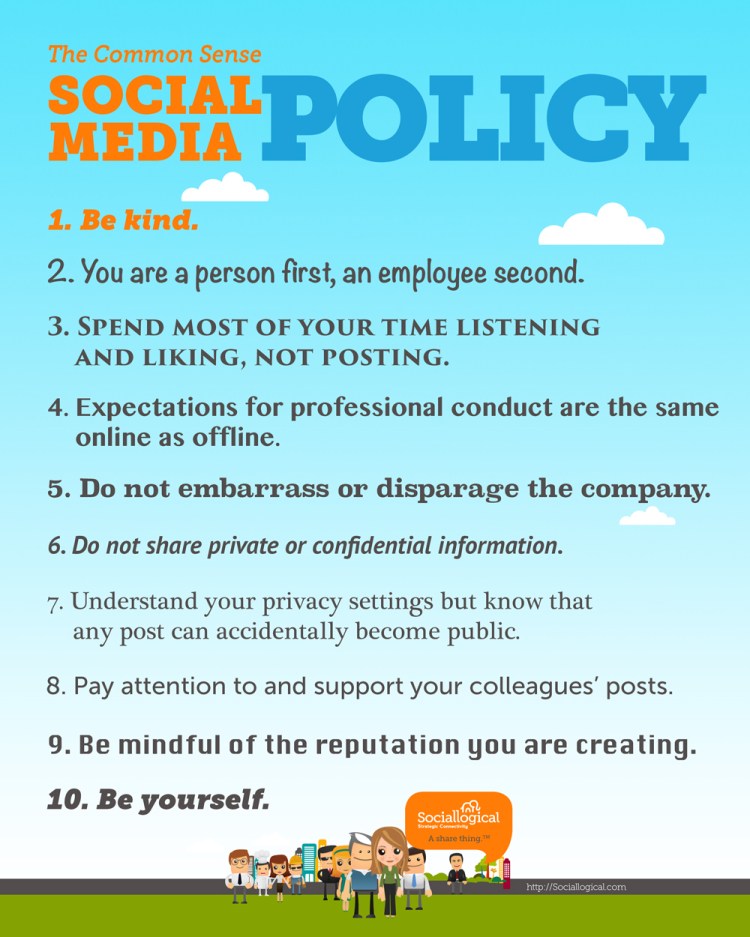
The novelty of social media can make it difficult to know what content crosses the line, posing ethical, legal, and professional challenges for users (Crompton, Rippard, & Sommerfeldt, 2016). Social media has ushered in a brave new world where companies and agencies have had to develop policies regarding their employees’ digital self-expressions. Stories of medical doctors posting private photos of patient procedures, teachers wearing “provocative” clothing, first responders photographing grisly accident scenes, and various professionals engaging in casual drug use are just a number of incidents that have sparked the conversation on what is- or should be- “postable” and what is not. Some of these concern privacy or confidentiality of the photographed, but most are concerned with whether or not the posted content is grounds for termination.

Not only is knowing your employer’s social media policies essential, but understanding how your posts may impact your future employability is also important. As adult educators, we should prepare our students for the workforce. Part of this education should include appropriate uses of social media, what content to steer clear of, how to interpret corporate social media policies, ethical considerations, protecting the confidentiality and privacy of clients, coworkers, etc., and how to responsibly use social media for networking purposes.
Reference

CROMPTON, H., RIPPARD, K., & SOMMERFELDT, J. (2016). To Post, or Not to Post, that is the Question: Teachers Candidates’ Social Networking Decisions and Professional Development Needs. Journal of Technology & Teacher Education, 24(3), 257–279.


LinkedIn

Networking is still done in some of the “old” ways- professional conferences, networking events, and company parties- but there are some digital platforms that also offer opportunities for job-seekers. LinkedIn is the predominant social networking site for professionals, boasting over 500 million worldwide users (www.linkedin.com). With many of the same capabilities as Facebook, LinkedIn allows users to post original content, respond to others, post job listings, browse job offerings, find a course or training, connect with other professionals in their field, find resume writers and career coaches, and so much more.

Social networking sites allow users to see the connections that are hidden in real life (Commoncraft, n.d.b.). These networks contain hidden opportunities for a number of things, but LinkedIn is the one site dedicated to working professionals and helping them advance, grow professionally, and connect with other professionals in their field. LinkedIn is drawing on some of those traditional networking methods and bringing them to digital life for millions of users.

Reference

Commoncraft. (Director). (n.d.b.). Social networking in plain English [Video file]. Retrieved from http://www.commoncraft.com/video/social-networking

FaceTime

The use of video-calling applications, such as FaceTime, Skype, and Facebook Messenger, is beneficial for a number of purposes. In recent events, these applications have quickly become a critical component of operations for a number of industries. “Social distancing” encouraged- and required, in some cases- by the spread of COVID-19 has made video-calling an attractive way to communicate, collaborate, and conduct business. In my field of study, FaceTime is being used by law enforcement officers to request warrants from judges remotely. While the electronic warrants process has been around for quite some time, not all departments have been using the technology. The magistrate court of my county just started using FaceTime for warrants last week for the first time. The young clerks, already familiar with the application, had to show the senior judge how to use FaceTime to prevent the usual influx of officers to the office seeking warrants. This example demonstrates the power of technology to help us get the job done when physical contact is inconvenient or impossible. Making sure adult learners are technologically competent must be a top priority for institutions of higher learning if they are going to send adaptable workers out into a competitive job market.

GroupMe

There is a growing movement in higher education of a participatory learning culture that embraces global sharing of information (Bonk, 2011). Current online education, however, is limited in the types of interactions it promotes among students and faculty. Discussion posts, for example, are topic-specific, formal, and graded. They are necessary to demonstrate student participation and understanding, but they are not conducive to “normal” student socialization. Peripheral discussions, such as current events, related topics, and applications in the field, do not have a place within the existing online format. With network learning as the current most common form of self-directed learning, and projected to become the most dominant form of learning in general, it makes sense to enhance the collaboration capabilities of the online learning experience (Lawson & Murray, 2018). Additionally, social media competence is an emerging workplace competency that literature suggests many graduates are lacking as they enter the workforce (Zhu, Yang, Xu, & MacLeod, 2018). GroupMe offers a free and user-friendly solution to these problems, providing an environment that is familiar and comfortable to most of the student population, while preparing those who are not yet fluent users (Stathopoulou, Siamagka, & Christodoulides, 2019).

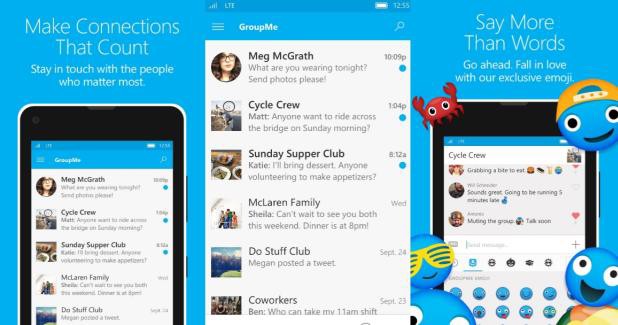
            GroupMe is a free group messaging application and each group is limited to the people invited, so interactions are typically specific to the purpose of the group. It is different from social media sites in that it is simply for text communication and not designed for content or generalized socializing. Class-specific groups, for example, would consist only of the enrolled students of a particular class and term. GroupMe could be used by students and educators to streamline communication regarding group projects, provide a place to ask questions about class assignments, requirements, and readings, and send reminders or other helpful information. In order to do any of these things now, students must log on to their student profile on the school website from a computer. This is remarkably inconvenient, particularly when students are in different time zones and access their computers from home at different times. These limited abilities clearly limit the interaction and engagement necessary for student motivation.

References

Bonk, C. J. (2011). The world is open: How web technology is revolutionizing education. San Francisco, CA: Jossey-Bass.

Lawson, S. & Murray, S. (2018). Assessing the Effects Social Media has on Online Learning. Journal of Marketing Development and Competitiveness, 12(2), 69-75. doi:10.33423/jmdc.v12i2.1259

Stathopoulou, A., Siamagka, N., & Christodoulides, G. (2019). A multi-stakeholder view of social media as a supporting tool in higher education: An educator–student perspective. European Management Journal, 37(4), 421-431. doi:10.1016/j.emj.2019.01.008

Zhu, S., Yang, H., Xu, S., & MacLeod, J. (2018). Understanding Social Media Competence in Higher Education: Development and Validation of an Instrument. Journal of Educational Computing Research, 57(8), 1935-1955. doi:10.1177/0735633118820631 

Artificial Intelligence

Artificial intelligence (AI) is the theory and development of computer systems able to perform tasks that normally require human intelligence. AI is a revolutionary technology because it is responsive, decisive, adaptive, and independent. AI is particularly beneficial to higher education because of its potential to increase student retention, access, and outcomes, as well as lower cost and decrease time to completion students (Barrett, Branson, Carter, DeLeon, Ellis, Gundlach, & Lee, 2019). For these reasons, I believe that AI is a key emerging technology that educators should not be threatened by, but should embrace for the many benefits it offers to students. I do not necessarily see AI as a replacement for human instruction, but I imagine incorporating AI into my professional practice as a tutoring tool and as a means of scaffolding information in a more thorough way than is typically done within the temporal confines of a class. 

Reference

Barrett, M., Branson, L., Carter, S., DeLeon, F., Ellis, J., Gundlach, C., & Lee, D. (2019). Using Artificial Intelligence to Enhance Educational Opportunities and Student Services in Higher Education. Inquiry: The Journal of the Virginia Community Colleges, 22(1), 1-11.Retrieved from https://commons.vccs.edu/inquiry/vol22/iss1/11

Virtual and Augmented Realities

Virtual and augmented realities are similar technologies that are finding a place in modern education. Virtual worlds are 100% digital ecosystems, while augmented realities are digital objects superimposed in real-life scenes on a phone or tablet (Edutopia, 2013). These technologies can be used for adult learners in a number of ways, such as allowing students to take virtual field trips of museums, government buildings, historical sites, etc. Providing the most immersive learning experiences for adult learners can increase student motivation by giving students confidence in the content when information is accessed in a more interesting way, thereby holding their attention, and providing a variety of real-life applications. Students can also participate in training simulations for practical “experience.”  The relevance established by these applications can improve student satisfaction, which is why I think the technology can be meaningful in higher education. As an adult educator, I imagine the technology would be a good complement to lessons that can be difficult to comprehend without a relevant lived experience.  

Reference

Edutopia. (2013). Technology integration in education. Retrieved from http://www.edutopia.org/technology-integration

Design a site like this with WordPress.com
Get started